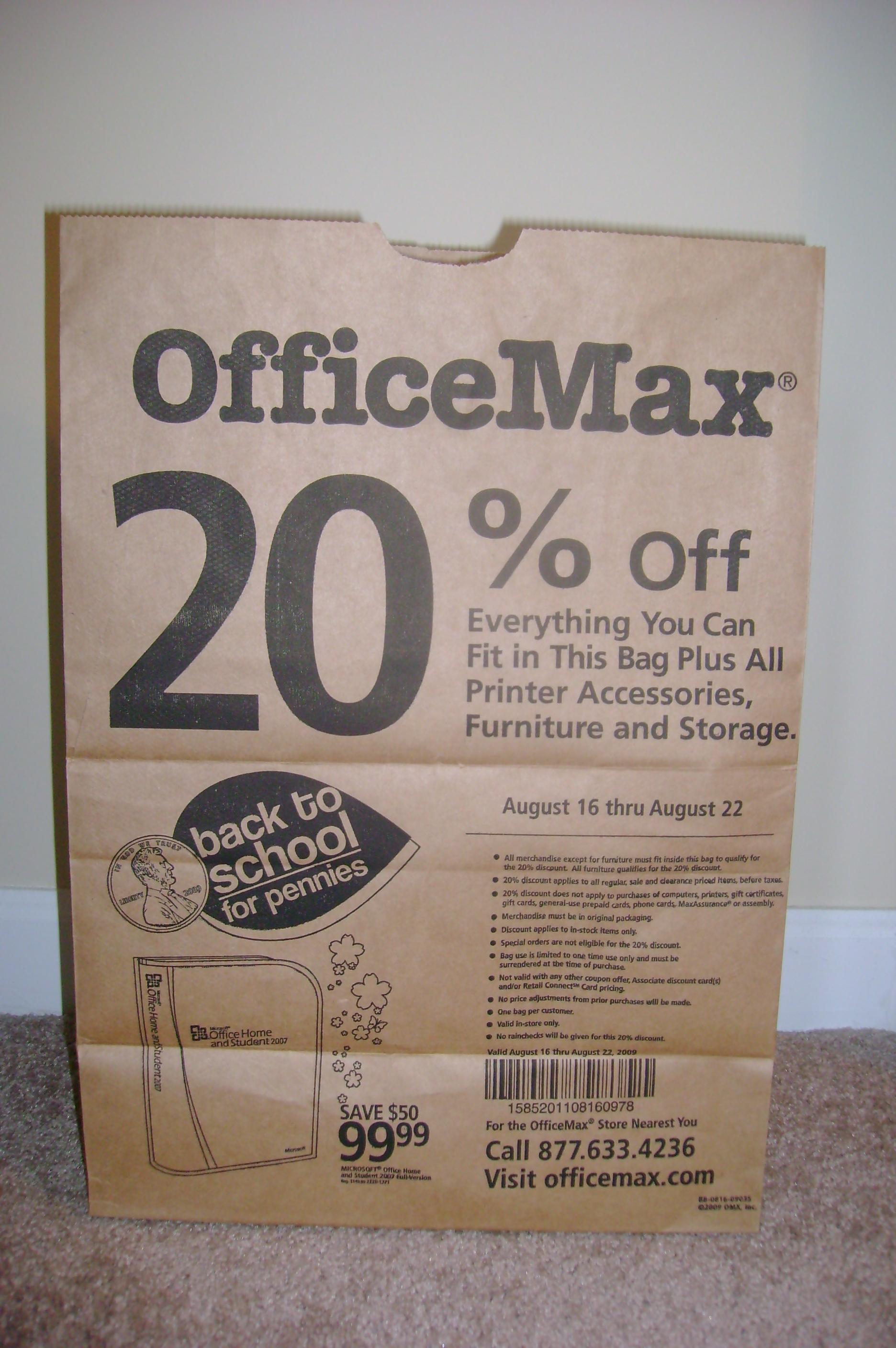
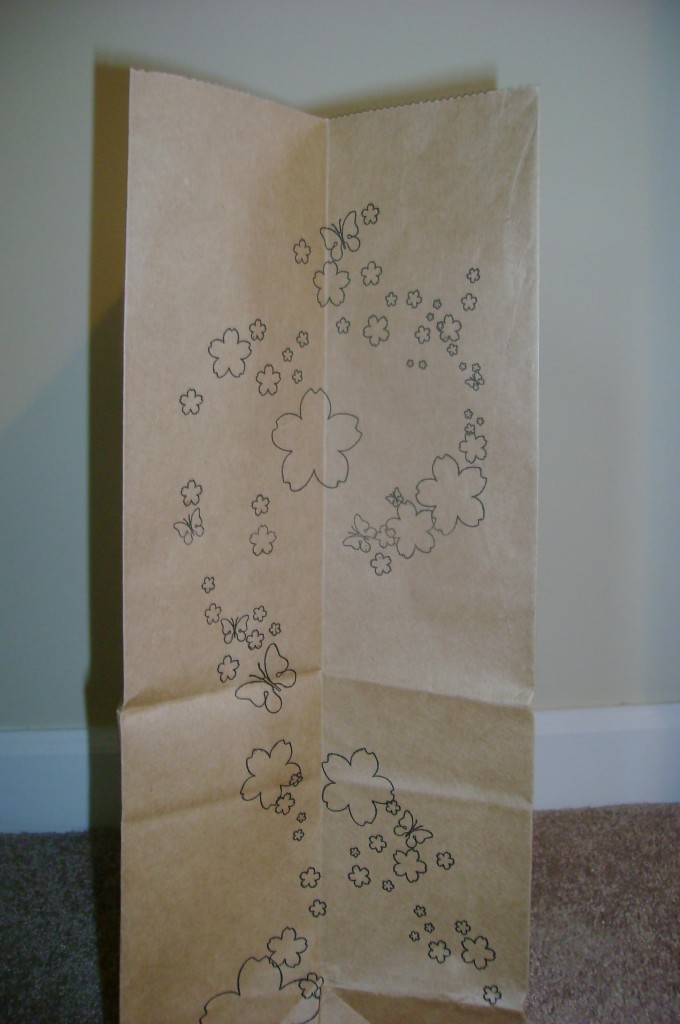
I opened my Sunday newspaper this weekend and noticed an unusual ad stuffed among the many circulars. The ad was a full-sized grocery bag, and it was anything but subtle.
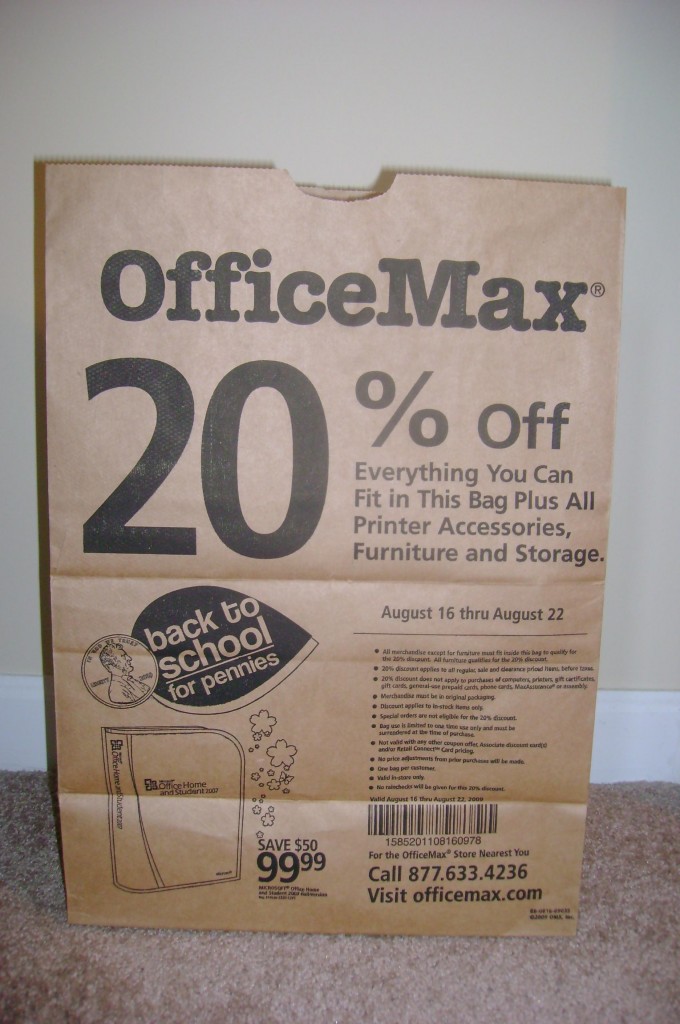
Office Max’s promotion runs from Aug. 16 to Aug. 22 and gives shoppers 20% off everything they can squeeze into the brown bag. If you’re thinking how best to fit a new office chair into the bag–don’t worry. All furniture qualifies for the discount, according to the small print. Computers, printers, and a few other items are among the unfortunate few that do not qualify.
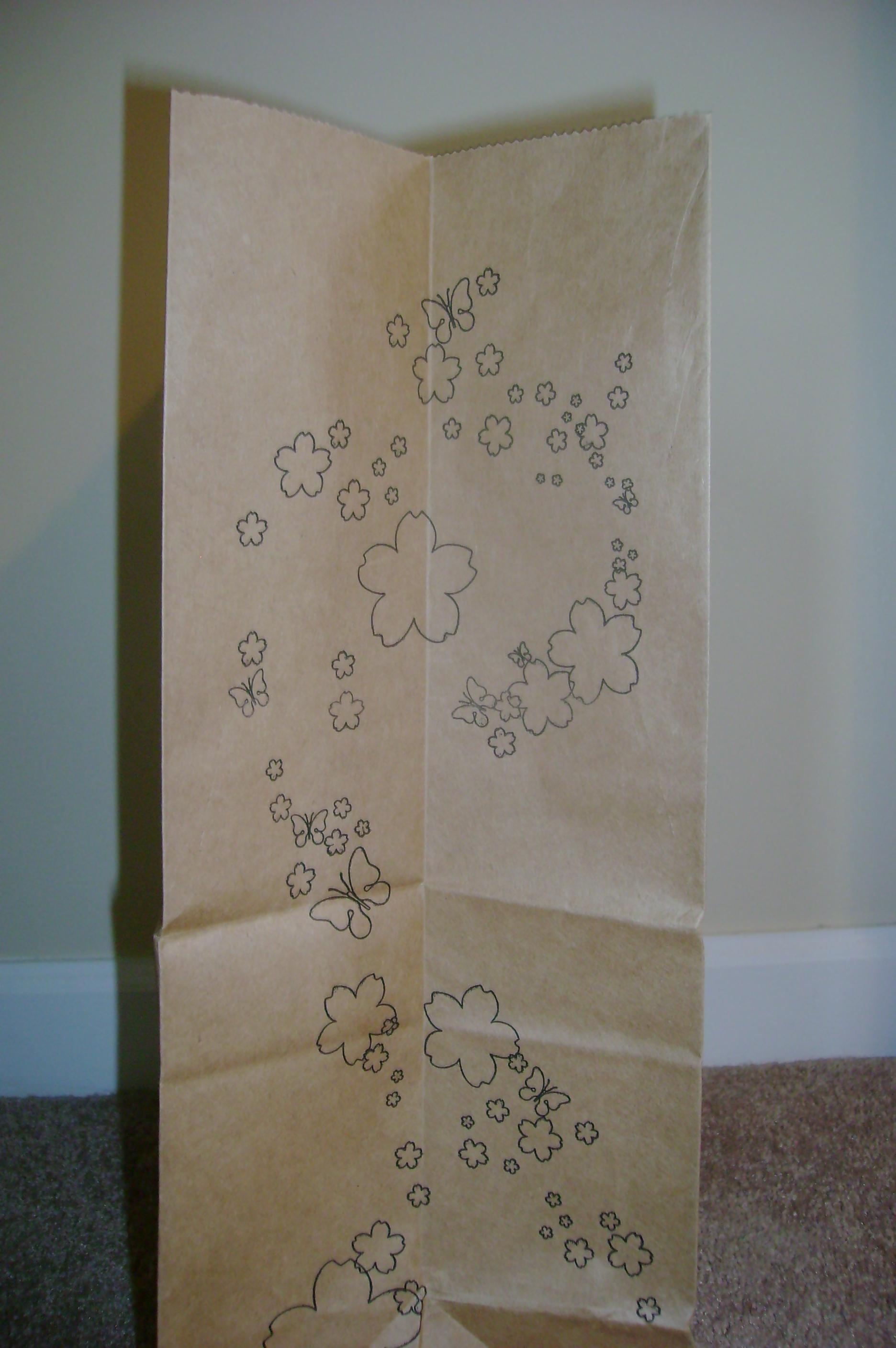
I was surprised at the style and creativity of the ad. The bulky brown paper certainly stood out from the rest of the Sunday circulars, and the design looks good. There’s even a pattern down the side instead of the usual blank brown space:
Have any marketers reading this tried something similar? Or have you seen other companies try something similar in the past? Let us know in the comments…
Referrals from friends are a strong influence on how teens and tweens learn about “new brands and cool new stuff,” according to survey results released last week by Pangea Media.
Pangea is an entertainment an online advertising company that operates a network of quiz-related websites. The survey received 2,396 responses, and allowed for multiple selections when asking “How do you find out about new brands and cool new stuff?” The results:
o 76.4 % friends
o 75.5% stores
o 56.8% television commercials
o 52.6% magazine ads
o 39.8% online ads
o 35.0% Web/search engines
o 27.7% television shows
The results from asking how they “learn about new stuff” online (only one answer could be given):
o 27% ads in search engines
o 24% social networking sites
o 21% when friends email or IM
o 15% pop-up ads
o 13% trusted website
The results underscore that one of the best ways to earn your brand the elusive “cool factor” among consumers age 10 to 19 is have your brand referred to them by a friend. Stores are another powerful place to reach this demographic, even more so than any type of advertising queried, according to the survey.
Every once in a while I hear about a marketing promotion gone horribly wrong. When I first heard about a 1956 Reader’s Digest campaign that involved pennies, I thought it was another marketer’s tale of woe.
The late Walter H. Weintz, a direct mail pioneer and the circulation director at Reader’s Digest in the 50s, mailed 100 million pennies as part of a subscription campaign. The pennies were mailed with a letter encouraging recipients to mail back one penny as a down payment on a subscription, according to the New York Times article linked above.
Here’s what happened, according to this random fact book:
“The magazine planned to send out 50 million letters, which meant they needed 100 million coins–enough to deplete the entire New York area of pennies. The U.S. Mint intervened, forcing Reader’s Digest to make quick arrangements to ship in 60 million more pennies from all over the country. Then, when the company finally got all the pennies it needed, it stored them all in one room–and the floor collapsed under the weight.”
Sounds like a total disaster right? Not exactly. The promotion drew a record number of responses.
“That mailing, along with other direct marketing campaigns that Mr. Weintz conceived, was credited in large part for raising the magazine’s circulation” from about 4.5 million in 1948 to over 12 million in 1959, according to the New York Times.
Weintz took a big risk on that campaign, and it paid off big time. It goes to show that marketing far out on a limb can yield the best fruit–but only if the branch doesn’t break under your feet.