
B2B Marketing: Combining sales and marketing knowledge to improve lead qualification
Few issues create more conflict between sales and marketing than lead qualification criteria. In the MarketingSherpa 2011 B2B Benchmark Report, 72 percent of marketers listed generating higher-quality leads as their single biggest challenge, up from 69 percent the prior year. In most cases, Sales and Marketing each see lead qualification from very different perspectives, both of which have value.
In sales, management spends considerable time, including extensive one-on-one coaching, teaching sales people about lead qualification criteria, often dissecting specific sales calls, contacts, opportunities, and accounts. Good sales people soon learn that qualifying prospects takes significant skill and judgment. Invariably, the best sales people are superb at this skill.
In contrast, the best marketers look at a sophisticated combination of techniques for delivering more qualified prospects to sales:
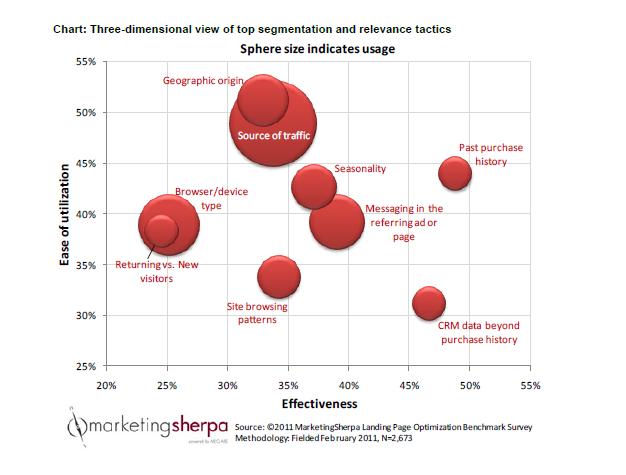
- Targeting. By soliciting the right audience, fewer out-of-market prospects inquire.
- Messaging and calls-to-action. The right message and supporting content will attract the most qualified buyers.
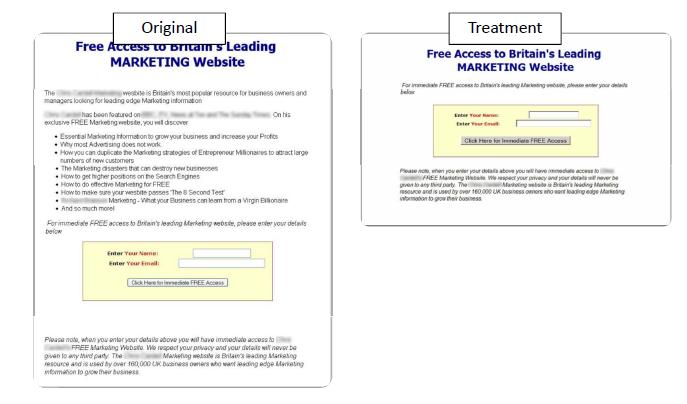
- Explicit user-supplied information. Registration forms enable marketers to ask qualifying questions, questions that can evolve as the prospect moves deeper into the buying cycle. Unfortunately, prospects are unwilling to fill-out a lot of information on a registration form so this tactic must be used with great restraint. MECLABS has one case study, for example, that shows a 189 percent increase in registration largely by decreasing the amount of information on a registration form.
- Implicit data. Increasingly, marketers are drawing inferences about not just an area of interest, but the likely depth of interest, the role of the responder in the buying process, and similar qualifying information, all based not on what a prospect says but on what he or she does, primarily via his or her clickstream behavior but also via other media and transactional information.
- Data Hygiene, enhancement, and consolidation. The cloud is creating very scalable and cost-effective tools for cleaning up inquiries, appending additional or better business card or firmagraphic information to each record, and consolidating duplicate accounts, contacts or areas of interest. The right processes will typically identify 14 to 21 percent of the lead pool as either duplicate or not usable (e.g., the visitor enters “Mickey Mouse” for a name).
- Lead Scoring. Lead scoring uses any and all of the implicit, user-supplied information along with explicit and appended information to identify and prioritize records worthy of human follow up.
Leaving aside tele-qualification as a marketing function, the key difference between the approach of sales and marketing is this: marketing uses largely quantifiable techniques, primarily driven by highly scalable business rules and automation while sales uses qualitative techniques that are extremely nuanced and very subjective and invariably much more exacting for a given account.
In other words:
- Marketing improves the probability of success across a pool of responders.
- Sales identifies the probability of success for a particular responder.
Customers and prospects hedge, withhold information intentionally, change their minds, and/or misunderstand and even fabricate information. Sales people use, not just the words of a customer, but a range of information, including someone’s tone, body language (in the case of on-site sales calls), the perspective of others within the account, external sources, and many other tools to evaluate the probability of purchase. While lead scoring is improving every day, it obviously has a long way to go before replicating the qualification techniques of sales people.
The truth is these two approaches are highly complementary
The more sales understands the tools and limitations marketing uses, the more insightful their suggestions can be; likewise, the more marketing understands the criteria and methods the best sales people use, the more marketers can improve their own upstream practices.
Related resources
MarketingSherpa B2B Summit 2011 – in San Francisco and Boston
B2B Marketing: Building a quality list
B2B Marketing: The 7 most important stages in the teleprospecting funnel
Members library – B2B How-To: 5 lead nurturing tactics to get from lead gen to sales-qualified
Free MarketingSherpa B2B Newsletter
Review: B2B Marketing Best Practices – MarketingSherpa 2011 Handbook by Lee Odden at TopRank online marketing blog